Sturgeon County Animal Control is here to respond to animal-related complaints and ensure bylaws are followed. Sturgeon County does not currently have a cat bylaw.
This includes the following:
- Enforcing Sturgeon County’s Animal Control Bylaw and Dog Control Bylaw
- Regulating the keeping of poultry or fowl, including urban hens
- Identifying the number of animals allowed and where they can be kept
Submitting an animal-related concern or complaint and reporting a lost/found pet
Bylaw officers are available to discuss your concerns and help reunite lost pets with their owner. Call Enforcement Services at 780-939-8400 during business hours (Monday to Friday from 8:30 a.m. to 4:30 p.m.). After-hours calls can be directed to 780-939-4321 and will be handled through an answering service. You can also report a lost/found animal using our online form. Animals in distress or animal welfare issues should be directed to the Alberta SPCA at 1-800-455-9003.
For emergencies, call 911.
Responsible Pet Ownership
Many Sturgeon County residents have a furry family member. Sturgeon County encourages all pet owners to be responsible and familiarize themselves with the: Animal Control Bylaw and Dog Control Bylaw.
As a general guideline, being a responsible pet owner includes:
- Having a valid dog licence
- Providing proper identification for your dog
- Ensure your dog is microchipped and that contact information is kept up-to-date
- Ensure your dog wears a collar/harness with their dog licence attached and/or a tag with your contact information
- Spaying and neutering companion pets
- Keeping your pet safe in all weather
- Knowing how to report a lost animal
- Ensuring your pet is on a leash in public spaces
- Picking up after your animal
Dogs
Our Dog Control Bylaw details important rules about dog ownership.
- Sturgeon County dog owners in all multi-lot subdivisions, hamlets, and Canadian Forces Base Edmonton must purchase a dog licence and renew that licence each year.
- Licence tags must be worn by the licenced dog whenever it is off the owner’s property.
- Generally, no person should have more than three dogs.
- Owners must pick up after their dogs.
- This must be done immediately if a dog defecates on public property or on someone else’s private property.
- On the owner’s property, the waste must be removed promptly so it does not cause an excessive odour.
- Dogs must not cause damage to public or private property.

Dog Licensing
Free dog licensing is available for dogs with a valid microchip. See the ‘Dog Microchipping’ and ‘Free Dog Licensing’ sections below.
Sturgeon County dog owners in all multi-lot subdivisions, hamlets and Canadian Forces Base Edmonton must obtain a dog licence for each dog, every year.
Dog licences are $20 for neutered males and spayed females, or $30 for unaltered dogs. The fee helps animal control to provide necessary services, like patrolling for dogs running at large, responding to questions from the public and investigating animal control complaints.
Your licence is valid for one year from the application date. Note: While you renew your licence each year, you do not receive a new tag each year.
Sturgeon County will remind you via email 30 days prior to your licence(s) expiring; however, it is your responsibility to keep your dog’s licence up to date. Keeping the licence and your contact information up to date will help us reunite you with your pet if it goes missing.
Failure to obtain a dog license, where necessary, may result in fines under the Animal Control Bylaw.
Payment Options
Payment Options
Pay online or in person at:
Sturgeon County Centre
9613 100 St.
Morinville, Alberta
T8R 1L9
Free Dog Licensing
Sturgeon County offers free dog licences for any resident who provides a valid microchip number for their dog. Once your dog’s microchip number is confirmed, you’ll receive a Sturgeon County dog licence at no cost.
Dog licences still need to be updated every year, but the licence will stay free as long as your dog’s microchip remains valid. Please note that the owner information on the microchip has to match the individual applying for the licence.
Our goal is simple: Help more dogs stay safe, get home faster, and support responsible pet ownership across our community.
Dog Microchipping
Microchipping is a small step that makes a big difference. It helps keep your dog safe and supports a caring, responsible community. Talk to your pet care provider for more on how to microchip your dog, and consider the following benefits of microchipping:
Free dog licence
Sturgeon County offers free dog licences for any resident who provides a valid microchip number for their dog.
Helps lost dogs get home faster
Helps lost dogs get home fasteA microchip is a tiny, permanent ID that can’t fall off like a collar or tag.
If your dog gets lost, animal services or a vet can scan the chip and contact you right away.
Reduces stress for pets
Being lost is scary for animals.
When dogs are brought home quickly, their stress goes down and they feel safe again.
Keeps the community safe
If a dog is involved in an incident, a microchip helps Animal Control identify the dog and reach the owner quickly. This helps keep everyone safe—including your pet.
Encourages responsible pet care
Dogs with proper identification are much more likely to be returned home.
This means fewer animals staying unclaimed and more families staying together.
Helps during emergencies
During fires, floods, or evacuations, pets can get separated from their families.
A microchip helps reunite dogs with their owners during these stressful times.
Provides lifelong identification
A microchip lasts your dog’s entire life. It’s safe, permanent and reliable.
Helps prevent theft
Only the registered owner can update a microchip’s information.
This means the chip can help prove ownership and protect your dog if it’s ever taken.
Reduces pressure on community resources
When dogs are returned home quickly, animal control can focus on other important work—which, in turn, helps to keep community costs down.
Found Dogs
Sturgeon County’s animal control officer makes every effort to identify dogs using tags on their collar, microchip, or tattoos. If the dog cannot be identified, it is brought to the Edmonton Humane Society.
Edmonton Humane Society
Phone: 780-471-1774
13620 163 St. NW, Edmonton, Alberta
Vicious Dogs
Our Dog Control Bylaw sets strict guidelines for owners of dogs that are deemed vicious through a hearing of the courts. These guidelines include mandatory confinement, control, signage, and licensing.
Under the bylaw, vicious dogs are defined as any dog that has:
- without provocation, chased, injured, or bitten any human, domestic animal, or livestock
- without provocation, damaged or destroyed any public or private property
- without provocation, threatened or created the reasonable apprehension of threat to another human, domestic animal, or livestock
Owners of a vicious dog are required to pay a $1,000 annual licensing fee and could face fines ranging from $500 to $2,500 for various offences. (Note: these fines may double with repeated contraventions.)
Nuisance Dogs
Dog owners can be fined for allowing their dog to be a nuisance. Under the Dog Control Bylaw, a nuisance dog:
- Howls or barks excessively
- Bites, attempts to bite, barks at, or chases any person, domestic animal, or livestock
- Does any other act that causes harm, damage, or injury to a person, animal, or livestock
Fines under this section range from $300 to $1,000.(Note: these fines may double with repeated contraventions.)
Keeping Other Animals
Our Animal Control Bylaw details important rules about animal ownership.
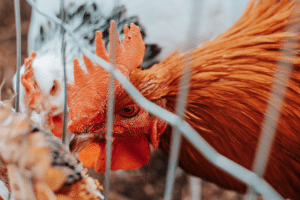
Chickens (Hens and Roosters)
- Hen keepers must keep at least three hens and not more than six hens per site.
- Residents are not allowed to keep a rooster.
- Hen keepers must register their flocks into the provincial database and report the PID number to Sturgeon County.
- Each urban hen must be kept in the coop; hens cannot be at large.
- Coops must be built to provincial standards and meet all requirements for accessory buildings under the Land Use Bylaw.
- Coops must be maintained in good repair and sanitary condition, free from vermin and noxious or offensive smells and substances.
- Egg production is for self-consumption; you cannot sell the eggs.
Other Livestock
For requirements and restrictions related to all other livestock, refer to the Animal Control Bylaw.