Property Assessment Map
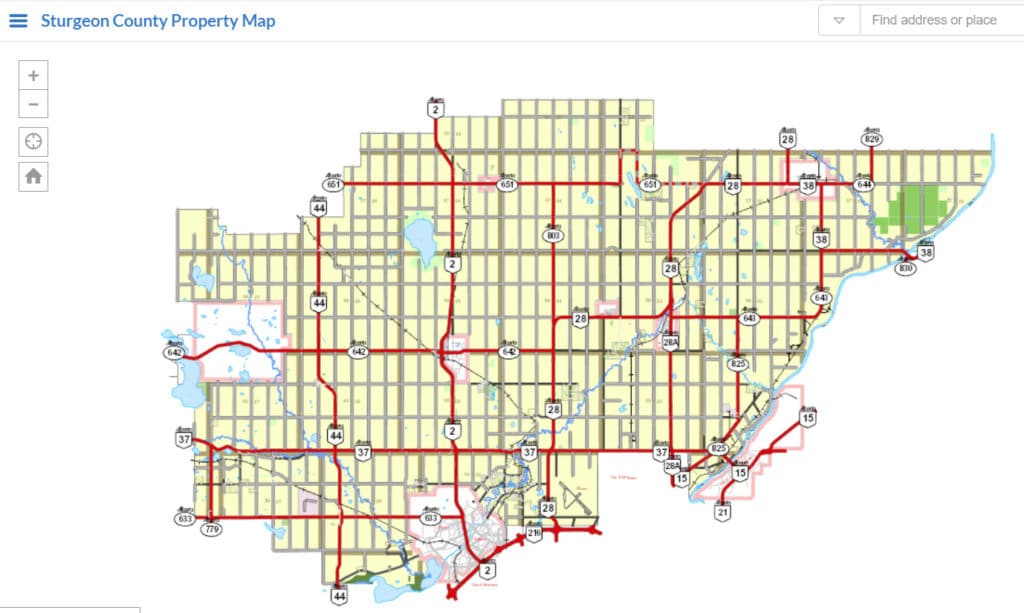
To find your current property assessment, visit the interactive Property Assessment Map.
Property Assessment and Tax Notices Now Issued Separately
To enhance transparency and improve service delivery, Sturgeon County will be issuing property assessment notices separately from tax notices.
Benefits to this approach include providing residents with a clearer understanding of how their property’s assessed value is determined, independent of the taxes they owe. It also allows Sturgeon County to align with provincial assessment timelines, improves budgeting accuracy, reduces confusion, and supports more efficient handling of inquiries and appeals. Overall, it strengthens communication and ensures a fairer, more responsive assessment system.
Starting in 2026, property assessments will be issued in January and tax notices will continue to be issued in May.
If you have questions about the separation of property assessment and tax notices, please contact Assessment Services at 780-939-0601 or assessment@sturgeoncounty.ca.
Property assessment places a dollar value on property in order to calculate taxation.
Provincial legislation requires that:
- Sturgeon County prepares an annual assessment of all residential and non-residential properties. The assessments must be prepared using mass appraisal, meet provincial legislated standards, and represent the fee simple value of the property. The valuation date is July 1 of the year preceding the current tax year. The real estate market establishes the market value of your property; assessors simply measure it.
- The condition of your property is recorded. The condition date is December 31st of the year preceding the tax year. The condition of your property is determined by local assessors from property inspections and property information requests sent out and received from residents.
Property Data Updates
If you have received a request from Sturgeon County Assessment Services to update your property details or provide information about your property, please use the form below to submit your response.
Have a Question? Ask an Assessor
Submit your assessment question(s) using our online tool and an assessor will contact you within two business days.
Understanding Your Property Assessment
Learn more about what characteristics such as location, age, size, quality of construction, and site influences are all considered in your property’s assessed value.
If you have questions about the details of your property assessment, contact an assessor. It is important to speak with an assessor before filing an assessment complaint.
Property Assessment FAQs
How is my property’s value decided and who decides it?
The assessment of properties in Alberta is a provincially regulated process that is not governed by your local Council. Residential and non-residential properties must be valued to reflect their market value, as required by Alberta law.
By law:
- The valuation date is July 1 of the previous year
- The condition date is December 31 of the previous year
For residential and non-residential properties, County assessors are required to use a ‘mass appraisal’ standard. This means they use large samples of local sales to analyze property features driving real estate values and appropriate assessment for each property. Statistical testing of the resulting assessments is required by provincial regulations and is audited by the Government of Alberta.
In other words, recent property sales in your area and across the County are the main driver influencing your property value.
Heavy industry, oil and gas properties are assessed by the province. To learn more about this process, visit the Government of Alberta’s designated industrial property assessment page.
Why did my assessment go up from last year?
There are various reasons why your assessment may change, including (but not limited to):
- Changes in the local real estate market
- Additions, renovations or new construction
- Changes in how the property is used
- Corrections to property details
- Updates required by Alberta law
Did my assessment go up to make up for potential future revenue loss as the result of industrial tax assessment appeals?
The County cannot artificially change property values to generate more tax revenue.
All property assessments must follow provincial guidelines and legislation. The Government of Alberta audits all municipal assessments and Sturgeon County has passed these audits every time. Local assessors ensure that property values stay fair, accurate and equitable.
Property values have generally gone up across the capital region because the real estate market has gone up. Higher assessments are not unique to Sturgeon County.
How does my property assessment affect my property taxes?
Your assessment shows what your property was worth on July 1 of last year.
We use your property’s assessment to calculate your property tax by applying:
- Sturgeon County’s tax rate
- The provincial Education requisition rate
- The provincial Homeland Housing requisition rate
As a general example, a $10,000 increase in a residential property assessment would result in an approximate $3.25 increase in your monthly property tax bill, based on the 2026 tax rates in the approved budget (the 2026 tax rate will be confirmed in April 2026).
I disagree with my property assessment, what do I do?
Please contact Sturgeon County Property Assessment Services first, to start assessment inquiry by using the online contact form, calling 780-939-0601, or emailing assessment@sturgeoncounty.ca.
If the issue cannot be solved with an assessor, you may file a formal complaint with the Assessment Review Board (ARB). The ARB is an independent panel that decides the issues based on their merit to influence the value of the property and applicable Alberta legislation.
Please note:
- The deadline to file a formal complaint is printed on your assessment notice
- Complaints must be in writing and on the correct form
- A filing fee is required
- The ARB can only review issues listed on the form
- Formal complaints are generally addressed within the same tax year
Common reasons for a formal complaint:
- The value seems incorrect
- Property information is wrong
- The value seems unfair compared to similar homes
- The property class is incorrect
How can I see my assessment details?
Go to Sturgeon County’s online property assessment map.
To find your property:
- click on the map
- type in your address or enter your roll number
- click on your property to open your report
Why is my property assessment different from what I paid for my home?
Market prices may have changed between the valuation date and the day you bought your home.
What property features are used in assessments?
Common features that affect value include:
- Location
- Lot size
- Type of home (like bungalow or two storey)
- Extras (like a garage, finished basement, or fireplace)
- Year built
- Size of the living area
- Condition of the home
- Renovations or repairs
These are the same things a typical buyer would look at when shopping for a home.
Some features can raise your value, and others can lower it.
Will a complaint delay my tax payment deadline?
No. You must still pay your property taxes by June 30, 2026 (the payment deadline will be clearly indicated on the tax notice you receive in May). If your complaint is successful, your taxes will be adjusted afterward.
Who can I contact if I want to talk to someone about my specific situation?
Please contact Sturgeon County Assessment Services, by using the online contact form, calling 780-939-0601, or emailing assessment@sturgeoncounty.ca.
What if I can’t pay my taxes all at once?
The Tax Installment Payment Plan allows property owners in Sturgeon County to pay their property tax in monthly installments rather than a single payment
Assessed Value
Assessed values consider the property size, age, construction quality, and condition of any structures on the property. Your use of the property determines the tax rate applicable to your property (residential/non-residential, farm, Machinery & equipment). Since no two properties are alike, your property may be valued and taxed differently than your neighbour’s property.
Rural farm properties enjoy some provincially regulated exemptions. Exemptions are based on the amount of farmland owned and how buildings are used for farming operations. These exemptions are not automatically applied and should be discussed with your local assessor.
The details of your property are used to calculate your property’s assessed value, and correspondingly this value is used to calculate your property taxes. It is important to review your property assessment details to ensure they are accurate. You can report any discrepancies in your property details to your assessor.
For more information on how property tax is calculated visit, Property Taxes.
Supplementary Assessment
If you’ve built something new on your property—like a house, garage, or major renovation—and it was finished or moved into during the year, you might receive a Supplementary Assessment notice in the mail. This is a way for the County to recognize the added value of your property that wasn’t included in your regular tax notice (which is based on how things looked as of December 31 of the previous year).
Because these improvements weren’t part of your original assessment, their value is taxed separately and only for the portion of the year after the work was completed.
Why it matters
Supplementary assessments help ensure everyone pays their fair share for local services like emergency services, policing and road maintenance. It’s about keeping things fair for all property owners.
What you need to know
- Supplementary Assessment Notices are mailed out in October.
- Be sure to pay your bill by the due date listed to avoid any penalties.
- Visit property tax payment for options on how to pay, including the option to join the monthly Tax Instalment Payment Plan (TIPP).
Local Improvement Charges
A local improvement charge is a tax applied to properties that will benefit from improvements, such as new sewer lines or sidewalks, in a specific area. This tax pays for the capital costs of the improvements. It is different from a municipal tax because it only applies to properties that benefit from the improvements, and it is only charged for a specific time. This program can be initiated by the property owners and managed by the municipality. Currently, Currently, Sturgeon County has two local improvement levies, the Riviere Qui Barre San Sewer (Bylaw 1353-15) and the Trestle Ridge Waterline (Bylaw 1599-22).
Agent Representative Authorization Assessment Information Request
This form allows an owner, corporation, or property manager to appoint an agent to act on their behalf. This agent may be an individual, a corporation, an employee or a family member.
Related Links
Related Pages